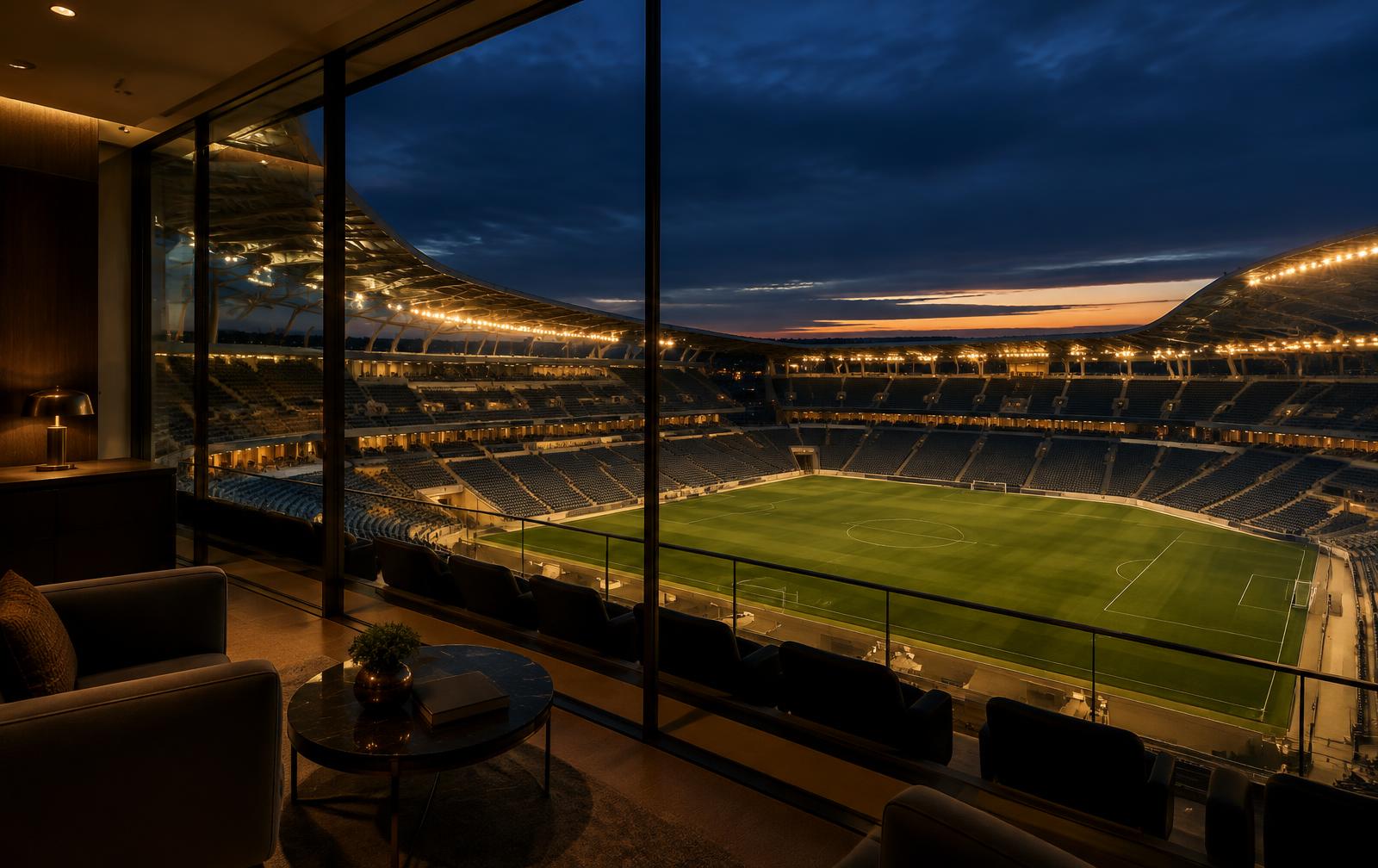
It was 7:00 a.m. at Boston Stadium, and kickoff wasn’t scheduled until 6:00 p.m. I had already arrived for work, along with members of the 300-person team I was responsible for leading. We were expecting more than 45,000 football fans that evening, and every single one of them deserved the same extraordinary experience we had delivered just two days earlier.
The fans didn’t care that we had already hosted a World Cup match. They didn’t know how many hours our teams had worked or how little time we had between events. Nor should they. For many, this would be their first and possibly only opportunity to attend a FIFA World Cup match. They had purchased tickets, traveled to Boston, reserved hotel rooms and planned an experience they might remember for the rest of their lives. My responsibility was to make sure the experience they imagined was the experience they received.
What most people don’t realize is that the World Cup begins long before the referee blows the whistle. By 7:00 a.m., preparations were already underway for thousands of people who wouldn’t arrive for hours. Hospitality, staffing, sponsor activations, guest movement and coordination between departments all required attention. Hundreds of decisions had to come together to make the evening appear effortless.
Then there were the surprises. A delivery could arrive late, a schedule could change, or we could receive word that a king and queen from another country had been added to the VVIP guest list. Their plane might be landing in two hours, leaving us three hours to prepare a luxury suite before their arrival. Food, flowers, décor and hospitality arrangements all needed to reflect the expectations of guests attending one of the world’s most prestigious sporting events. Meanwhile, the team still had more than 45,000 fans to prepare for.
That was the business behind the world’s biggest football tournament, and it offered a perspective on sponsorship that most marketing executives never get to experience firsthand.
The World Cup the Fans Never Saw
For two years, I worked toward FIFA World Cup 2026 as Experiential Director of Fan Experience, stationed at Boston Stadium, which hosted seven matches. Throughout that period, I had the opportunity to observe 32 brands and commercial relationships across the World Cup ecosystem. Some activations impressed me tremendously. Others left me questioning whether some of the world’s most recognizable companies were making the most of their investments.
What fascinated me wasn’t simply the creativity or the amount of money being spent. It was the difference between what a company believed it was purchasing through sponsorship and what its customers actually experienced.
A sponsorship agreement can secure extraordinary rights, visibility and access to audiences that brands spend years trying to reach. Yet those rights do not automatically create an extraordinary experience. Someone must determine where the brand belongs, how consumers will interact with it, and what happens when a carefully planned activation encounters an unexpected challenge. When tens of thousands of fans are arriving, those decisions become especially consequential.
What Coca-Cola, Visa and McDonald’s Revealed
I watched Coca-Cola prepare its World Cup experiences and paid attention to far more than the branding. I observed the staffing, coordination and operational preparation required to bring a global brand to life across multiple fan touchpoints. At a separate FIFA World Cup Trophy Tour event at Boston College, rain forced adjustments to the experience, moving activities indoors. What impressed me was how effectively the team delivered the revised execution. The circumstances had changed, but the commitment to the audience had not.
Visa provided another perspective. I watched a retail space being built with only hours remaining before fans would arrive. It was a reminder of the compressed timelines that accompany major sporting events, where operational readiness must align with an audience’s arrival rather than a production team’s preferred schedule. A global brand may spend months preparing a concept, but its success still depends on the decisions made during the final hours before opening.
Then there was McDonald’s. Here was one of the world’s most recognizable restaurant brands, with decades of FIFA World Cup sponsorship history. Yet during our preparations at Boston Stadium, I repeatedly found myself asking a simple question: Where were the Big Macs and fries?
We were preparing to welcome thousands of fans who would spend hours at the stadium. They would be hungry, purchasing food and looking for familiar products. Yet the McDonald’s food experience I expected wasn’t part of the stadium activation arrangements we were discussing. The company had World Cup marketing campaigns and restaurant promotions beyond the stadium, and I recognize that food sales, concessions and sponsorship rights involve commercial agreements that extend beyond what I directly observed. My question concerned the potential opportunity in front of us.
When a restaurant brand has access to thousands of hungry football fans, shouldn’t the ability to serve those fans be among the first commercial opportunities examined? It is the kind of question that deserves attention before a sponsorship activation strategy is approved, rather than after the event has concluded.
The Commercial Opportunity Beyond Visibility
Over more than two decades working in global brand strategy and experiential marketing, I have observed how companies approach major sponsorship investments. Much of the discussion naturally focuses on rights packages, visibility, audience reach and brand association. Those considerations are important, particularly when executives must justify substantial marketing expenditures. Yet they represent only part of the commercial equation.
The sponsorship agreement is not the experience. It gives a brand the opportunity to participate in an event, but the consumer ultimately determines whether that participation is meaningful.
Consider what happens when a fan enters a stadium. They are not thinking about sponsorship categories, media valuations or the cost of an activation. They are looking for their seats, purchasing food, meeting friends, taking photographs and preparing to enjoy the match. Their attention is already focused on an experience they care deeply about. A sponsor has the opportunity to become part of that experience, but it must first understand what the audience needs and values.
That distinction is particularly important as soccer clubs, leagues and their commercial partners compete for revenue and consumer attention. Rights holders are responsible for creating attractive sponsorship opportunities, while brands must determine how to translate those rights into experiences that support commercial objectives. Both parties have a stake in ensuring that the investment delivers value beyond visibility.
A beautifully designed activation may attract attention and generate social media engagement. Whether it advances the brand’s business objectives is a separate question. That requires an understanding of the audience, the purpose of the activation and the measures that will determine its success. It also requires considering what happens before fans enter the stadium and after they leave.
What 32 Brand Observations Taught Me
When I reflect on the 32 brands and commercial relationships I observed during FIFA World Cup 2026, I don’t simply remember logos, installations or marketing campaigns. I remember the decisions behind them. Some demonstrated the value of preparation, operational flexibility and understanding the audience. Others raised questions about opportunities that appeared to be overlooked.
I remember the teams working before sunrise, the compressed schedules and the constant responsibility of delivering a consistent experience across seven matches. I remember how quickly plans could change and how much coordination was required to make those changes invisible to the audience.
I also remember watching families experience the World Cup together, sometimes across three generations. A grandfather, a father and a young child could be sitting together, sharing a moment they might discuss for decades. For the brands participating in those experiences, the opportunity extended well beyond placing a logo in front of a large audience. They had the chance to become associated with a memory that already carried enormous emotional significance.
That is one of the reasons live sporting events remain commercially powerful. The audience arrives emotionally invested before the sponsor ever enters the conversation. The challenge for brands is to understand how they can contribute to that experience in ways that are relevant, memorable and commercially meaningful.
For professional soccer clubs, leagues, sponsors and their agency partners, the distinction deserves more attention. Selling a sponsorship is one commercial responsibility. Translating the agreement into meaningful value requires a different set of capabilities, including strategic planning, operational execution, audience intelligence and measurement.
At 7:00 a.m., with 11 hours remaining until kickoff, 300 people to lead and more than 45,000 fans expected, I wasn’t thinking about how impressive our sponsorship agreements looked on paper. I was thinking about what those fans would experience when they walked through the gates. They deserved our very best, whether they were attending the first match or the seventh.
The sponsorship may get a brand into the stadium. What happens next determines whether fans remember it.
Jayme Washington is a sports commercial growth and brand strategy advisor who served as Experiential Director of Fan Experience at FIFA World Cup 2026. Through Behind the Goal, she examines the global business of soccer, including sponsorships, partnerships, commercial strategy and fan experience.